
Two-Player International Draughts
Pass and Play
Two people at the same table do not need a room. Open the board and play: Black moves first, White follows. Before you begin, settle who sits Black, whether a finished capture can be undone, and who confirms a turn has been handed over. On a small screen, calling the square before you tap helps avoid a neighboring piece.
Getting Started
Lay the device between you and leave it there. Whoever is to move taps a piece, then a dark square; the turn ends when the piece lands.
New players should force a capture early, so they see that a quiet slide is refused while a jump exists. Then cover flying kings, promotion only at the end of the turn, and a loss when the other side has no move.
When you review, walk the move list backward: a shorter capture that should have been longer, a king that appeared mid-jump, or a back rank swept by a flying king. Undo from that point and try again.

Pass the Screen
Check the status bar before you tap so you know which color is to move. After a piece and a landing square are chosen, the turn is over, so hand the device across. A second tap on the same man is a new selection, not a continuation. Once a side has no move, the board stops taking input.
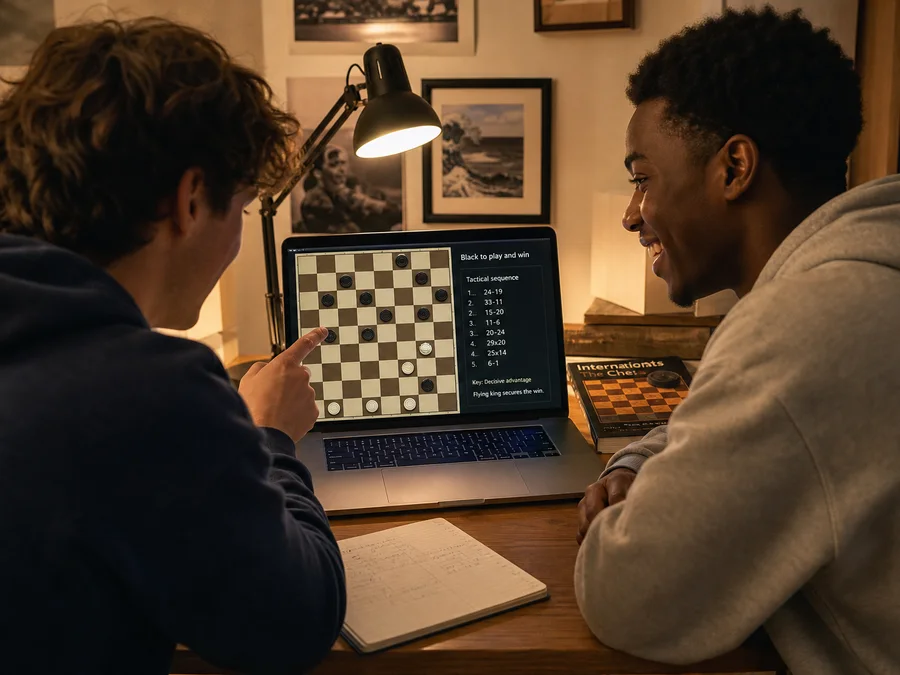
A Short Capture Does Not Count
The rules will not let you pick a capture that takes fewer pieces. Disputes usually come from thinking a man cannot capture backward, or from expecting promotion in the middle of a jump. The board is the referee: only the longest current capture is legal, and the recorded label is the move.
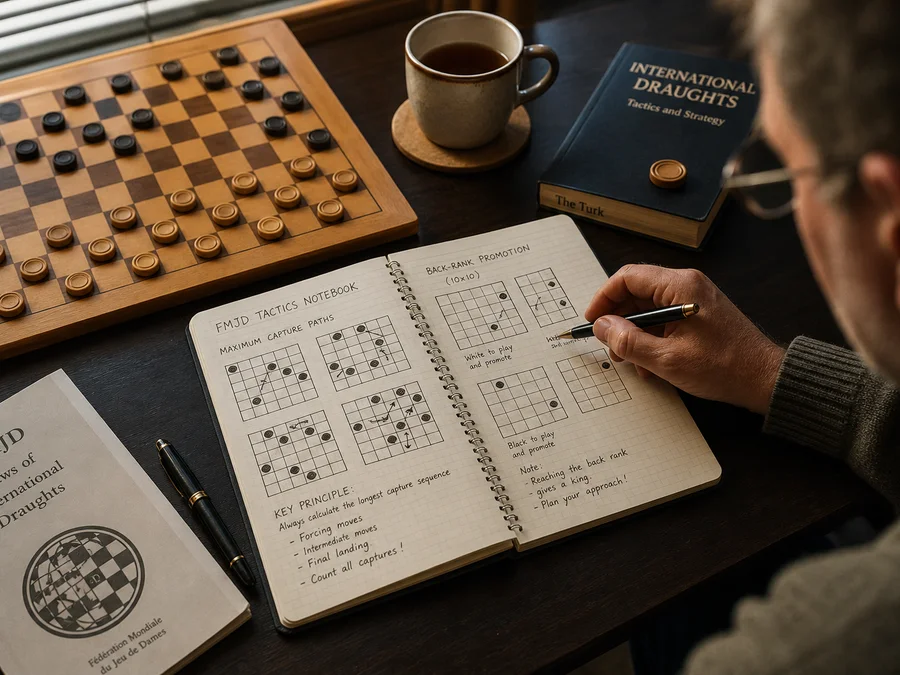
Swap Black Each Game
Black always starts, so a fair match is two games: A sits Black, then B sits Black. If the score is still tied, play another full pair. Agree on undo before the first game: casual play can rewind, while scored play can freeze a landed move. The move list stores each turn; replay that move instead of reconstructing the board from memory.
2players
1shared device
Blackalways moves first
2 gamesto swap who sits Black
